 08:00 - 17:00

In the Press
City Logistics' news room is a resource for the latest Logistics news. Here are some current news items where City Logistics was proudly featured.
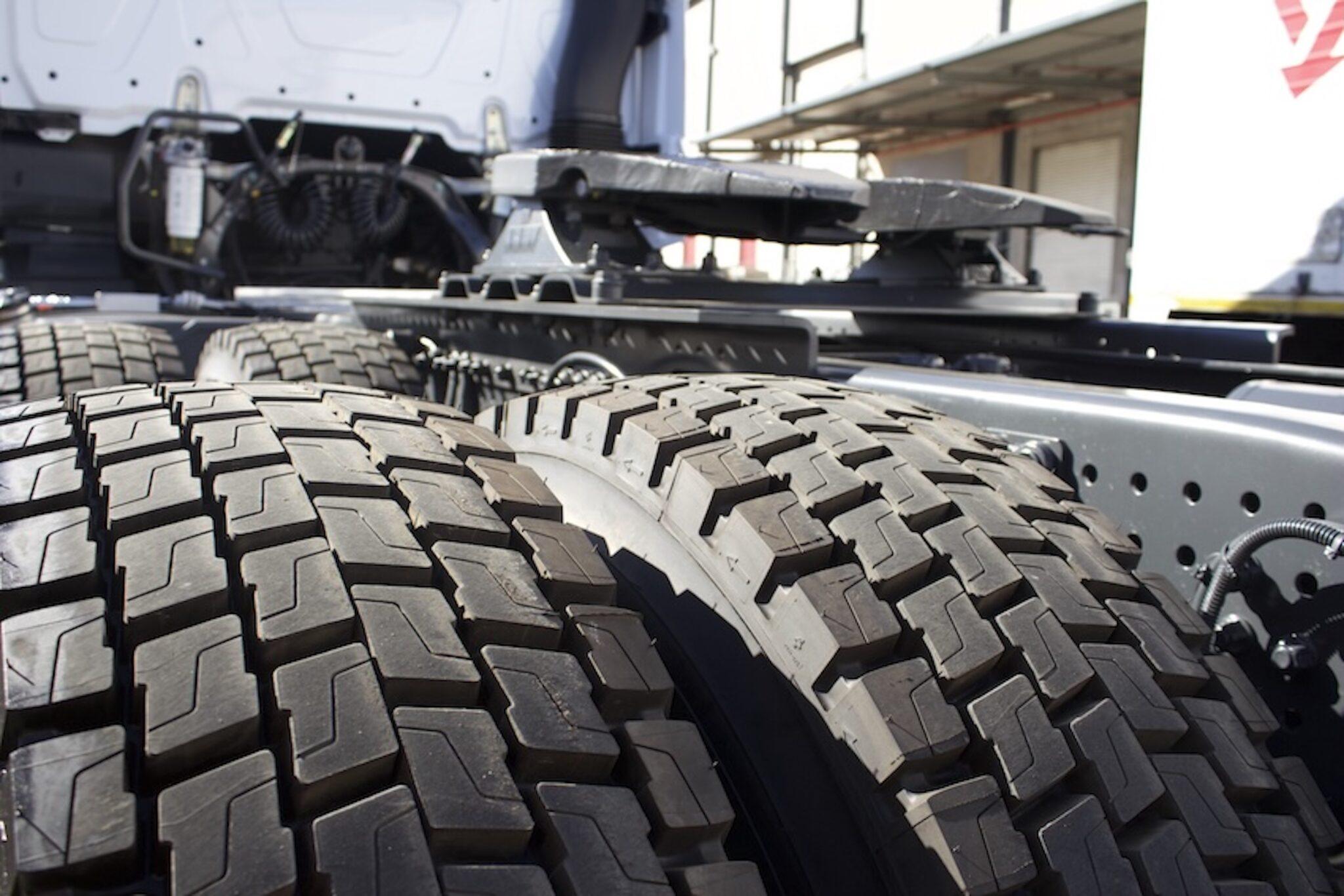
As road freight operators contend with tighter delivery expectations, high vehicle utilisation and challenging operating conditions, preventive maintenance is becoming a critical part of protecting uptime, safety and customer confidence.
South Africa’s logistics operators are heading into winter with renewed focus on fleet maintenance, as colder conditions, wet roads and reduced visibility place additional pressure on trucks across the road freight network.
South Africa Today: Road freight still leads SA’s supply chain
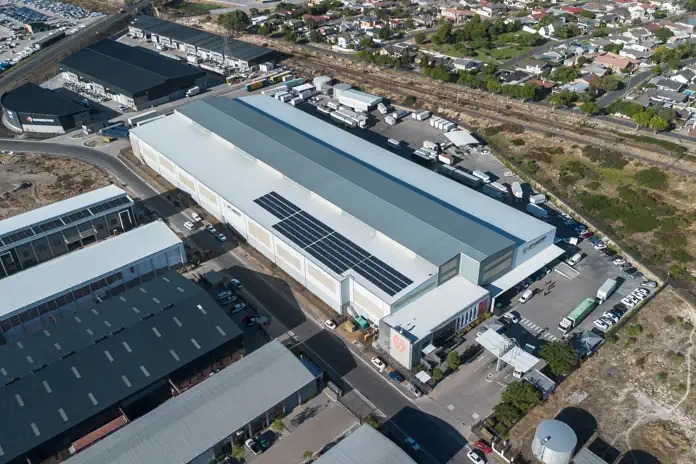
As South Africa continues to focus on rail recovery, port efficiency and logistics reform, it is easy to overlook the part of the freight system that still does most of the daily heavy lifting: road freight.
Trucks remain central to how goods move across the country, particularly when freight needs to reach regional towns, outlying distribution points, farms, retailers, industrial sites and customers beyond the reach of fixed infrastructure. While rail and ports are essential to a more efficient national logistics system, road freight continues to provide the flexibility, reach and responsiveness that many supply chains rely on.
South Africa Today: Active safety systems move further into trucking as fleet risk comes under sharper focus

Already familiar to many motorists, technologies such as predictive warnings, emergency braking and blind-spot detection are becoming more prominent in heavy vehicles, giving logistics operators new ways to support drivers and reduce operational risk.
For years, vehicle safety has been shaped most visibly by the passenger car market. New models are launched with increasingly sophisticated driver-assist systems, from automatic emergency braking and lane-keeping support to blind-spot monitoring and pedestrian detection. These features have become part of how motorists choose their next vehicles, and part of how manufacturers compete.
Logistics News: Warehouse automation shifts from strategy to necessity as supply chain pressures mount

The global warehouse automation market is growing at more than 10% per year and is projected to reach nearly $60 billion by 2030, reflecting the scale and urgency of this shift.
Across the logistics sector, warehouses are being asked to do more than ever before. The steady rise of e-commerce and omnichannel retail has driven up order volumes, where same-day or next-day fulfilment is often expected rather than exceptional. At the same time, labour constraints make it difficult to scale operations using traditional, manual processes. The result is a convergence of pressures that many facilities were not originally designed to handle. Despite this momentum, adoption remains uneven, with an estimated 80% of warehouses globally still operating with little to no automation.

When South Africans talk about fuel, the conversation usually starts with the price displayed at their local service station.
For road freight operators, however, the more important number is often somewhere else entirely: in the bulk diesel market that keeps trucks moving between depots, warehouses, stores and homes.
That market is less visible to consumers, but it can shift quickly when supply tightens. Durban-headquartered retail logistics company City Logistics says much of the pressure on transport operators starts with the discounts and supply terms that sit behind fleet fuel procurement.
South Africa Today: Fleet choices come under scrutiny as businesses count the cost of unsuitable equipment

A vehicle used for work is rarely just a way to get from one place to another. In logistics, it is part of the operating system. It determines how stock moves, how routes are planned, how safely teams can offload and whether a delivery point can be reached without turning the day into a string of workarounds.
For City Logistics, one of South Africa’s largest logistics companies, that makes fleet design a practical business decision rather than a purely transport-related one. The company has to balance payload, access, delivery windows and site conditions across very different environments, from suburban store replenishment routes to mall basements and high-volume distribution centre movements. A vehicle that performs well on one route may be inefficient, impractical or entirely unsuitable on another.
South Africa Trade Desk: Truck hijackings on the rise in South Africa

Truck hijackings, which were once considered to be a risk confined to specific routes or specific hours late at night, are now larger crime operations which often happen in broad daylight. For thousands of truck drivers across the country, the risk of being hijacked is an occupational reality that could play out at any moment.
Recent data from Tracker’s Vehicle Crime Index, which covers January to June 2025, indicates that the threat of truck hijackings has evolved in both pattern and geography. Vehicles owned by businesses are now 48% more likely to be targeted than privately owned vehicles, and account for 32% more crime than their share of Tracker’s base of over 1.1 million subscriptions. Hijackings overtake vehicle theft by nearly two to one. Business owned vehicles include cargo trucks as well as couriers delivering items bought online.
Business Fleet Africa: Procurement is becoming a core operational lever

A new global study by the Chartered Institute of Procurement & Supply, supported by GEP, signals a decisive shift in procurement's role.
Drawing on insights from 555 senior professionals managing an estimated $32 billion in spend, the report shows that procurement is no longer centred on cost containment but increasingly focused on risk management, resilience, and long-term value creation.
For fleet owners and supply chain operators, this reflects a broader transition: procurement is becoming a core operational lever rather than a back-office function.
South Africa Today: Using logistics to support communities, education and conservation

Corporate social investment often takes the form of funding or one-off donations. In some cases, however, support is shaped by a company’s everyday operations. City Logistics’ current initiatives reflect this approach, with a focus on education, youth development and conservation, supported largely through in-kind contributions and transport capacity.
SME Tech Guru: In logistics, the paper trail is running out of road

As delivery expectations continue to rise, the last mile has become the defining moment of truth in the logistics value chain.
Industry research supports this shift. A 2025 last-mile delivery report by Clickpost notes that the final leg of delivery now accounts for more than half of total shipping costs, while consumer surveys consistently show that delivery experience directly influences brand loyalty. In that context, inefficiencies at the point of delivery are no longer minor operational issues but strategic risks.
For many logistics providers, the move toward digitisation has not been driven by trends, but rather by operational necessity. While many people hanker for the good ‘ol days of physical documents and paperwork, the reality is that it creates a great deal of admin for logistics companies.

SA’s logistics teams are turning data into defence, tracking every route, monitoring cargo in real time and staying one step ahead of organised crime.

Global adoption is accelerating, but South Africa’s freight sector must balance innovation with operational certainty as it prepares for an electric future.
Electric trucks are no longer a speculative technology. Across major global markets (particularly North America, Asia, and Europe), they are increasingly visible in urban delivery fleets, port operations, and short-haul logistics routes. As governments tighten emissions regulations and manufacturers accelerate innovation, electric trucking is becoming a credible part of the transport mix — just not everywhere, and not for every use case. For South Africa, the conversation is less about ambition and more about readiness.

For decades, luxury passenger vehicles were the proving ground for new automotive technologies. Adaptive cruise control (1998 Mercedes-Benz S-Class), blind-spot monitoring (2003 Volvo XC90), and Matrix LED headlights (2013 Audi A8) all debuted on premium models before gradually trickling down to mainstream cars over 10 to 15 years.
Today, heavy commercial trucks are becoming early adopters of advanced vehicle technology, sometimes even before passenger cars.
South Africa Today: Workplace wellness days gain momentum as employers rethink employee health support

As stress, burnout and chronic health risks continue to rise in the workplace, companies across sectors are increasingly re-evaluating how employee wellbeing fits into operational realities. One approach gaining renewed attention is the use of onsite workplace wellness days, which bring preventative healthcare services directly to employees during working hours.
Global research suggests that when wellness initiatives are accessible and thoughtfully implemented, they can contribute to improved health awareness, employee engagement and, over time, organisational resilience. According to a review published in JAMA, workplace wellness programmes have been associated with healthier behaviours and improved self-reported wellbeing, even where short-term cost savings are less clear1.
South Africa Today: South Africa’s logistics sector is entering its next phase

South Africa’s logistics sector is entering 2026 under sustained pressure, but with greater clarity about what matters. Cost volatility, changing consumer behaviour, international e-commerce and rising security risks are no longer emerging themes. They are structural realities, according to Ryan Gaines, a long-time logistics executive focused on retail supply chains. The City Logistics CEO believes the next phase the logistics industry will enter will favour operators that understand volume dynamics, specialise deeply and invest in systems that expose inefficiency rather than simply add capacity.
Capital Equipment News: Paving the way for a sustainable future

The logistics industry in South Africa is undergoing a transformation, with a strong focus on sustainability and eco-friendly solutions. City Logistics, one of the country's leading logistics providers, is at the forefront of this shift, having recently tested the Fuso eCanter electric truck. This trial is part of a broader effort to reduce carbon emissions in line with global trends. The trial's results provide valuable insights for the construction and logistics industries, both of which are integral to South Africa's economic growth.
Capital Equipment News had the opportunity to speak with Anthony Naicker, Chief Operations Officer - First Mile at City Logistics, about the company's experience with the Fuso eCanter and how it might shape the future of logistics, particularly in construction and related industries.
Read Full Article Here. | Download pdf here
BizCommunity: How South African SMEs can overcome export hurdles

Expanding trade into neighbouring African markets offers significant growth opportunities for South African SMEs and larger companies, but it involves navigating complex regulatory environments and securing customs clearances. While SMEs face challenges due to limited resources and risk tolerance, larger companies also encounter hurdles. Strategic partnerships can help manage these challenges and support sustainable growth.
"Coordinating shipping, warehousing, and distribution across borders requires specialised knowledge and infrastructure," notes Ryan Gaines, CEO of City Logistics.
TrucksMag: Are electric trucks viable in SA? A local logistics company has put a fuso eCanter to the test

Earlier this year, Daimler Truck Southern Africa announced that it would launch a comprehensive line-up of battery-electric trucks – ranging from the eCanter to the eActros. The former was trialled by national logistics provider City Logistics to establish its variability as an intra-city transport option.
The four ton eCanter was put into duty from City Logistics’ Gosforth Park depot in Germiston, Johannesburg. The truck was tested along a 80 km round trip to a valued customer in Midrand each day. “We wanted to test the claimed range, as well as the speed to recharge,” commented Ryan Gaines, CEO of City Logistics.
MSN.com: SA apps plug service delivery gaps

How innovative local apps are transforming industries and solving everyday problems.
Internet adoption in South Africa is ahead of the global curve with 74.7% of citizens online versus the international average of 66.2%. The vast majority accessing the web on smartphones, mobile apps are no longer just a convenience – they’re a way of life.
Apps are such a big deal in Mzansi that the revenue they generate is expected to peak at approximately R10-billion ($550-million) by the end of this year and accelerate to over R12-billion ($700-million) by 2027.
TechFinancials: South Africa's hidden R750 billion economy is booming
South Africa’s informal economy is booming, with logistics companies seeing a substantial uptick in demand for warehousing in outlying areas from established retailers looking to tap into this R750 billion sector.
The local informal sector is increasingly important in South Africa’s economic prosperity, with its growth outstripping that of its formal counterpart.
It has always played a vital role in absorbing South Africa’s large unemployed population, providing a living for those who cannot find a job and supplementing the income of those on low wages.
TechFinancials: Tech and Equipment that can help logistics companies improve their sustainability credentials.

The logistics sector plays a crucial role in the economy, facilitating the movement of goods across vast distances. However, this sector is also a significant contributor to carbon emissions. As the world increasingly focuses on sustainability, it is imperative for logistics companies to adopt strategies that reduce their carbon footprint.
According to Martínez, a research scientist at the MIT Centre for Transportation and Logistics, freight transportation accounts for 8% of global greenhouse gas emissions, and its carbon footprint is projected to double by 2050. “As a responsible corporate citizen, we recognise the importance of taking action to mitigate this impact,” explains Ryan Gaines, CEO of City Logistics.
BizCommunity: Can artificial intelligence revolutionise the logistics sector?

Artificial Intelligence is a somewhat controversial topic. Some adore it, others hate it and some fear it. However, like it or not, it's coming to the fore in the logistics industry - where Artificial Intelligence of Things (AloT) is replacing manual processes and optimising, automating, and revolutionising every facet of the supply chain. But is South Africa ready for these technological innovations?
While AloT isn't without its disadvantages - many processes will lose their human element and become completely autonomous, which could lead to job losses - it has numerous advantages when it comes to improving productivity, optimising resources, and reducing expenses.
Automotive Business Review: Leaders in logistics unpack risk resilience

The business environment in South Africa is fraught with risks. Now that the elections are looming, experts in the logistics industry are urging companies to put measures in place to ensure that they can mitigate any risk and uncertainty that may ensue.
The last four years have been categorised by risk on the part of South African companies. First came COVID-19. Then, the July 2021 riots, which saw widespread civil unrest in the KwaZulu-Natal and Gauteng provinces, marked by rampant looting and violence. Businesses were forced to shut down, and employees stayed home for safety reasons. The economic damage was estimated at R50 billion by the Consumer Goods Council of South Africa.
TimesLive: What are arrester beds and how do they work?

Most people have seen the huge trenches that look like sandpits on the side of highways in South Africa, sometimes with a truck stuck in them, but what are these areas? How do they work? Why are they there?
The facilities are called "arrester beds" and are a concept developed and implemented over time by transportation engineers and safety experts around the world. They're a vitally important road safety tool, especially in mountainous or hilly areas where steep gradients are common.
TimesLive: Where are truck drivers allowed to sleep on long-haul journeys?

Picnic stops on the sides of national freeways are popular with motorists who use them to take a break, have a nibble and stretch their legs. but are they legal stopping points for trucks and can they rest at the sites overnight? if not, where can they sleep on their long-haul drives?
According to the road Freight Association (RFA), truckers must adhere to the many parking restrictions placed on them - and all other road users by the National Road Traffic Act.
News24: Are gas engines the future of trucking in South Africa?

Electric vehicles (EVs) are all the hype right now. but what about gas-powered trucks? Could they perhaps be the stepping stones to EV adoption?
They've certainly been around for some time; since 1996, Iveco - Europe's leading manufacturer of gas-powered commercial vehicles - has already sold around 45,000 gas vehicles that have driven over one billion kilometers. Numerous other truck makers have launched them too. Both businesses and consumers are gearing up for decarbonisation of the transport sector - and gas-powered trucks are a sustainable choice. So why aren't we seeing them trawling all over South Africa's roads.
TimesLive: Are trucks obliged to move into the yellow lane? We have the answer.

Most South Africans have experienced the following annoying scenario: being held up by a truck that appears to be moving at the speed of a tortoise.
This tends to raise the blood pressure of the motorist, who may well be tempted to shake his fist and scream: "Move over!" but should the truck driver really pull his rig into the yellow lane?
BizCommunity: #BizTrends2024: Logistics sector to face challenges in 2024

While 2023 was a good year for South Africa's logistics sector, it faces considerable challenges in 2024.
Starting with logistical challenges, the congestion and delays at the ports - particularly the port of Durban - directly affected South Africa's macro environment. As a result of port delays, some retailers' stock for Black Friday and the Christmas period was limited, which harmed revenue.
TimesLive: How weighbridges work and why they're the motorist's best friend

Have you ever wondered what happens at weighbridges when trucks are pulled over? Most people breathe a sigh of relief when the police officer standing on an off-ramp signals at the truck behind them to pull over. But do they consider what happens next? What are the police looking for? what takes place at the weighing stations?
Overloaded trucks are destroying our country's roads. That's what many South Africans believe. This is, however, far from reality because trucks on all major routes are subjected to close scrutiny.
IOL: Looking for a job in trucking? Here are the skills needed for it

With an estimated 400,00 trucks on South Africa's roads, the trucking industry has a high demand for employment.
The logistics business contributes significantly to the country's economy.
According to City Logistics, here is what you should ask yourself before you go for a truck driving position:
Can you jack-knife reverse?
TechFinancials: South Africa’s Freight And Logistics Market On A Rapid Growth Trajectory
DRIVEN by the freight transport sector, South Africa’s freight and logistics market is expected to boost the economy by $21.53 billion (R409.7 billion) in 2023, while online retail sales will more than double that contribution to $46 billion (R875.38 billion) within two years¹.
City Logistics CEO Ryan Gaines says development in the outlying areas, coupled with exponential growth in e-commerce, are significant factors for the country’s booming logistics sector.
News24: Trucks are hazards on South Africa's roads: myth or fact?

South Africa has a frightening road safety record. There are more than 800 000 road accidents in South Africa every year, translating to about 2 200 crashes on our country's roads daily. All too often, fingers are pointed at trucks – with truck drivers being accused of driving dangerously or poorly, or both. But is this criticism really justified?
The facts tell a different story…
Citizen Caxton Local News: Expert tips for fuel efficiency: drive smart, save big

With fuel prices on the rise in South Africa, finding ways to cut down on monthly fuel expenses is crucial. Learn how to drive more efficiently and save on fuel costs with insights from industry professionals.
TimesLive: 3 things to remember when driving with trucks this festive season
There are a number of dos and don’ts when sharing the roads with trucks.
“Truck drivers tend to have a bad reputation, and unfairly so. Many are some of the most experienced drivers on the road if you consider the number of kilometres travelled in their career to the number of accidents,” said Ryan Gaines, CEO of City Logistics, a privatelyowned logistics company.
CarMag: Stay Safe Around Trucks on the Road this Festive Season
 Here are a few tips provided by truck drivers to consider when sharing the roads with the 18-wheeled behemoths.
News24: Flashing lights and hazards: Some unwritten (but very handy) road rules ahead of the festive season

Holidaymakers will encounter hundreds of trucks en route to holiday destinations across the country. With this in mind, these handy tips on safely and politely navigating South African roads alongside the big haulers – using several unwritten rules - will come in handy.
"Always remember that these are unwritten rules of the road and not legal requirements; however, they may help road users safely navigate what are arguably some of the most dangerous driving conditions in the world," comments Ryan Gaines, CEO of City Logistics - a leading privately owned logistics company in South Africa.